Kids and family safety
Teenagers and location sharing: agreeing the rules together
With teenagers, tracking without agreement costs more trust than it buys. A consent-based approach to location sharing: what is shared and when, a phone as the tracker, zones and schedules instead of watching, and a date to review or stop.
Ashish Srivastava6 min read

Location sharing with a teenager works when it is agreed, not imposed. Tracking a teenager's phone without their knowledge buys a little information and costs a lot of trust, because teenagers find out, and a young person who feels watched in secret is less likely to call you when something does go wrong. The approach that holds up is sharing by agreement: you decide together what is shared, when, and with whom; your teenager can see what you see and question it; and there is a date to review the arrangement or stop it. A phone running a tracking app shares location and nothing else, and zones with messages and a schedule replace constant watching. This post sets out that approach.
Key takeaways
- Secret tracking tends to be discovered, and the trust it costs is worth more than what it shows.
- Agree what is shared and when: journeys, late evenings, travel, rather than every minute of every day.
- A phone with a tracking app shares location only. It has no SOS button and can be switched off.
- Use zones, arrival messages and a schedule instead of watching the map.
- Let your teenager see what you see, and set a date to review or stop.
Why secrecy backfires
The case for secret tracking sounds sensible: if they do not know, they will not switch it off. In practice it rarely lasts. A teenager notices that a parent knows something they were never told, finds the app on their phone, or a sibling mentions it. From that moment, the tracking has done its damage. It has taught a young person that their parents will act behind their back, at the age when you most need them to come to you when things go wrong.
There is a quieter cost too. A teenager who is tracked in secret learns to work around it: a phone left at a friend's house, a second phone, a dead battery at the right time. The information you get becomes less reliable exactly when you think you have it.
And there is the law. Rules on tracking another person differ between countries, and they tighten as children grow older; tracking a young adult without their knowledge can cross a legal line, especially at 18. Agreement is not just kinder, it is safer ground.
Sharing by agreement: journeys, late evenings, travel
The alternative is to treat location sharing like the other agreements of the teenage years, such as a curfew or who pays for the phone. Sit down together and agree:
- What is shared: the phone's position, and messages when it arrives at or leaves a few places. Not messages, photos, browsing or apps. The platform never sees any of those.
- When: always; or only on journeys to and from school; or only on late evenings out; or only while travelling alone for the first time.
- Who sees it: you, the other parent, nobody else.
- What happens when: what you will do if a message does not come, and what they should do if their phone is about to die.
Writing it down on one page you both keep turns it into an agreement rather than a rule handed down. Many families find the sharing they agree is narrower than the one they first imagined, and that it is enough.

A phone as the tracker: location only
Most teenagers already carry the device. A phone running a tracking app that sends positions in the OsmAnd format can report to your Alongpin account like any other device. The phone app page explains what such an app reports, and following a teenager's phone on the family map walks through the setup.
Be clear with each other about what a phone can and cannot do:
- It shares location. That is all. It raises no SOS alarm and takes no commands from the platform.
- It can be switched off. A flat battery, flight mode, a closed app or a teenager who wants an hour alone all look the same: the positions stop, and after a while the phone shows Unknown on the map.
- The teenager stays in control they can see. The app on their own phone shows that it is reporting, and they know how to pause it.
That last point is a feature, not a flaw. An agreement in which your teenager can pause sharing, and has agreed when they will not, is one they can keep. If you need an SOS button, for a teenager who travels alone a lot or has a health condition, a watch or personal alarm is the right device.
Schedules and zones instead of constant watching
Constant watching is tiring for parents and corrosive for teenagers. A few rules give you the information you actually need, and nothing more:
- Zones for the places that matter: home, school or college, a part-time job, the other parent's home.
- Arrival and leaving messages: an alert rule for Geofence enter or Geofence exit, limited to those zones under Only these geofences.
- A schedule: put the rule on a calendar under Only during, so messages come only on school mornings, or only after 22:00 on a Friday, as you agreed.
- A rule for silence: a Status unknown rule tells you when the phone has stopped reporting, which is worth knowing before you worry and worth agreeing about too.
With these in place, you look at the map only when a message says something unexpected. Your teenager knows that, because you agreed it.
Let them see and question it
An agreement is fairer when both sides can see what is shared. Some ways to make it visible:
- Give your teenager their own login, if your account can add users, and share the phone's device with them read-only. They see the same map, trips and history you see.
- Show them the rules and zones you set up, and change them together.
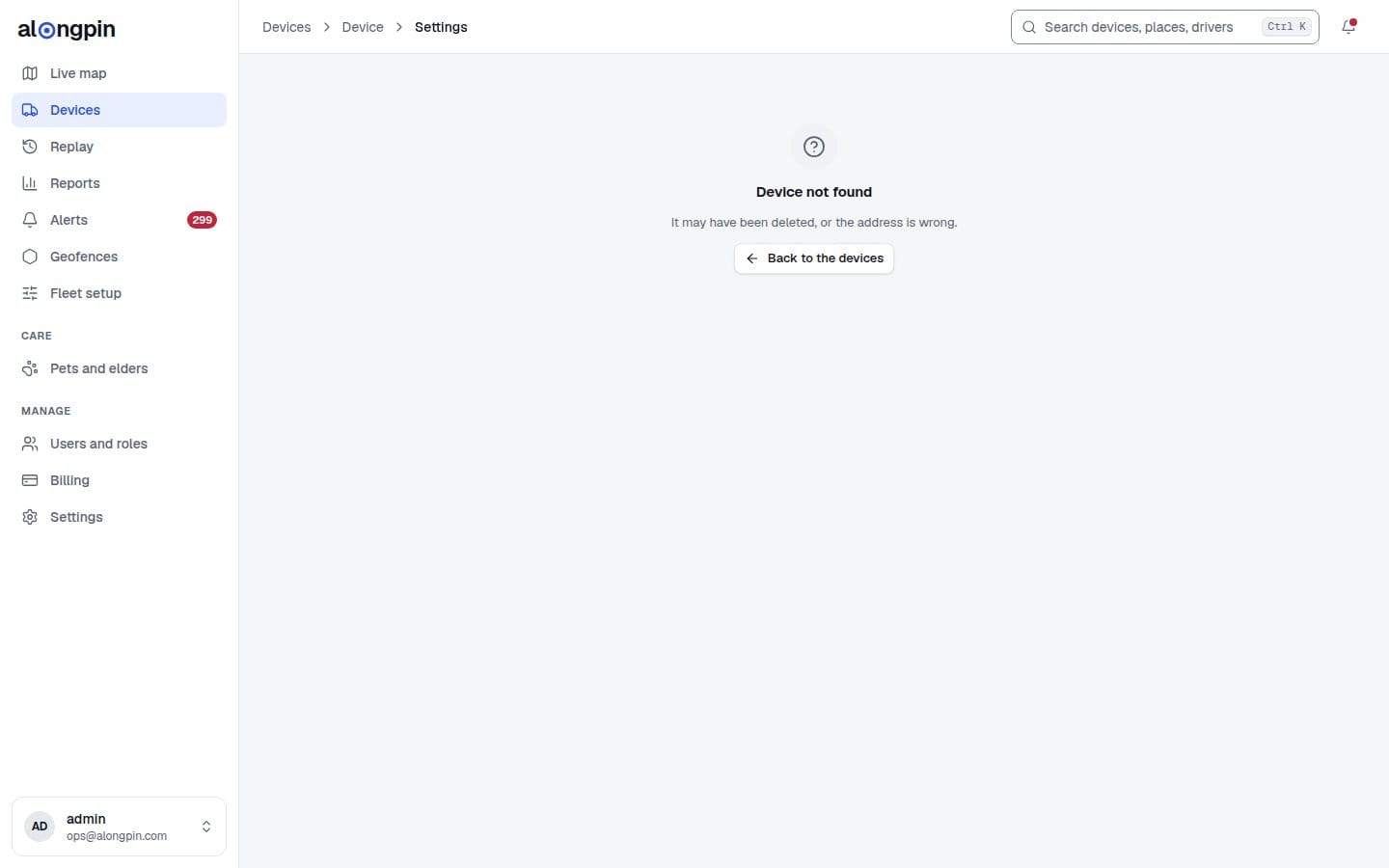
- Tell them how long history is kept. Positions are kept for a set period, 365 days by default, set by the account's administrator.
- Explain their rights. The privacy page sets out how the platform handles personal data, including access to it and its deletion.
A teenager who can check what you see has less reason to suspect you see more, and a clear way to raise it if something feels wrong.
A date to review or stop
Every agreement needs an end date, or at least a review date. Pick one together: the next birthday, the end of the exams, six months after they start travelling alone. At that date, ask:
- Is the sharing still needed, and for which journeys?
- Can it be narrowed: fewer zones, fewer hours?
- Is it time to stop?
When it stops, stop it properly. Stop sharing it with others, switch the app off together, and remove the phone from your devices. Removing a device from the account deletes its history with it, which is often the right ending.
If your teenager is about to start driving, the same approach applies to the car; a new driver in the family: agreeing on tracking with a teenager covers that conversation, and the personal safety page shows how families use the platform.
Caveats
Agreement does not remove every risk. A teenager in real danger may not be able to reach their phone, and a phone that runs out of battery stops reporting. Location sharing helps a family that already talks; it does not replace the talking. For younger children, how to talk to your child about a GPS watch covers the earlier version of this conversation.
How Alongpin helps
Alongpin (alongpin.com) is a GPS tracking platform you open in a browser or on your phone. A child's GPS watch or a teenager's phone shows on your family's map, geofences around home and school tell you about arrivals, and the SOS button reaches the people you choose. See how it works for family safety, check a watch in the device check, and read how Alongpin treats privacy.
Frequently asked questions
Should I track my teenager without telling them?
We would not advise it. It tends to be discovered, it costs trust, and in some countries it can be unlawful, especially once they are adults.
What if my teenager refuses?
Ask what part they object to. Many teenagers accept sharing on late evenings or long journeys, but not all day. Start with what you both accept.
Can my teenager see where I am too?
Only if you add your own phone as a device and share it with them. Some families find that a fairer arrangement.