Cars and bikes
GPS trackers for motorbikes: power, placement and alerts
A GPS tracker for a motorbike: wired to the battery or self-powered, hidden under the seat, and an alert the moment the bike leaves where you parked it. What to ask about battery drain and where the tracker goes.
Ashish Srivastava6 min read
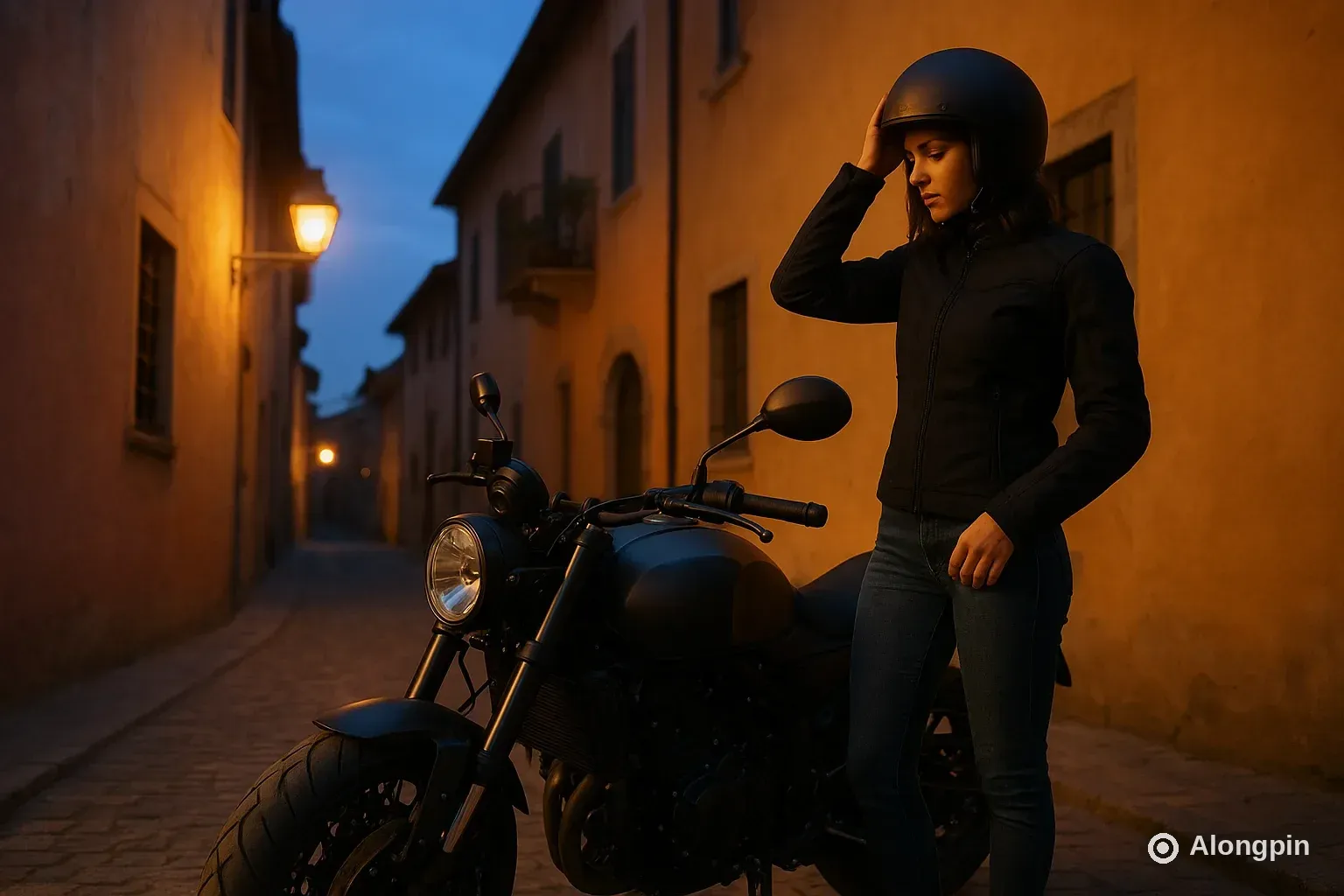
A GPS tracker for a motorbike is either wired to the bike's battery or runs on its own battery, sits hidden under the seat or in the tail, and tells you when the bike leaves the place you parked it. For a machine that spends its nights on the street, those three choices (power, placement and alerts) decide whether the tracker helps. A motorcycle GPS tracker works like a car tracker, but the bike's small battery, the weather and the lack of space change what you should buy and how you fit it.
Key takeaways
- A wired tracker runs off the bike's battery and reports often; a self-powered one fits anywhere but reports less and needs charging.
- A motorbike battery is small, so ask how much the tracker draws while the bike stands.
- Hide the tracker under the seat or in the tail, away from the exhaust and with a clear view of the sky through plastic.
- A zone around where the bike is parked, with a leaving alert, is the alert that matters on the street.
- Check that the tracker is supported before you buy it.
How is a tracker powered on a motorbike?
There are two ways, and each has its trade-off.
Wired to the bike battery
A wired tracker connects to the bike's battery, usually with a fused lead, and often to a switched wire so it knows when the ignition is on. It can report every few seconds while you ride, tells driving apart from standing, and most models carry a small backup battery so they can raise a power cut alarm if someone disconnects them. Fitting it takes basic wiring skills, or a motorcycle workshop.
Self-powered
A battery tracker needs no wiring. You charge it, hide it and leave it. To make the charge last, it reports far less often, sometimes only when it senses movement, and it cannot tell whether the engine is running. It suits a bike that is stored more than ridden, or a rider who does not want to touch the wiring.
Small battery, small drain: what to ask
A motorbike battery holds far less than a car battery, and a bike that stands for a week or two in winter can be flat in the morning if something keeps drawing from it. Before you buy a wired tracker, ask the seller:
- What is the standby current when the ignition is off and the tracker is sleeping?
- Does it have a sleep mode, and how often does it still report while asleep?
- Does it cut out when the battery voltage drops low, so the bike will still start?
- Is it rated for the bike's voltage? Most motorbikes run on 12 volts, but check, especially on an electric motorbike.
If you ride most days, the drain rarely matters. If the bike stands for weeks, a battery maintainer or a self-powered tracker is the safer choice.
Where should the tracker go on a bike?
There is little room on a motorbike, and the spot has to work for both the signal and the weather.
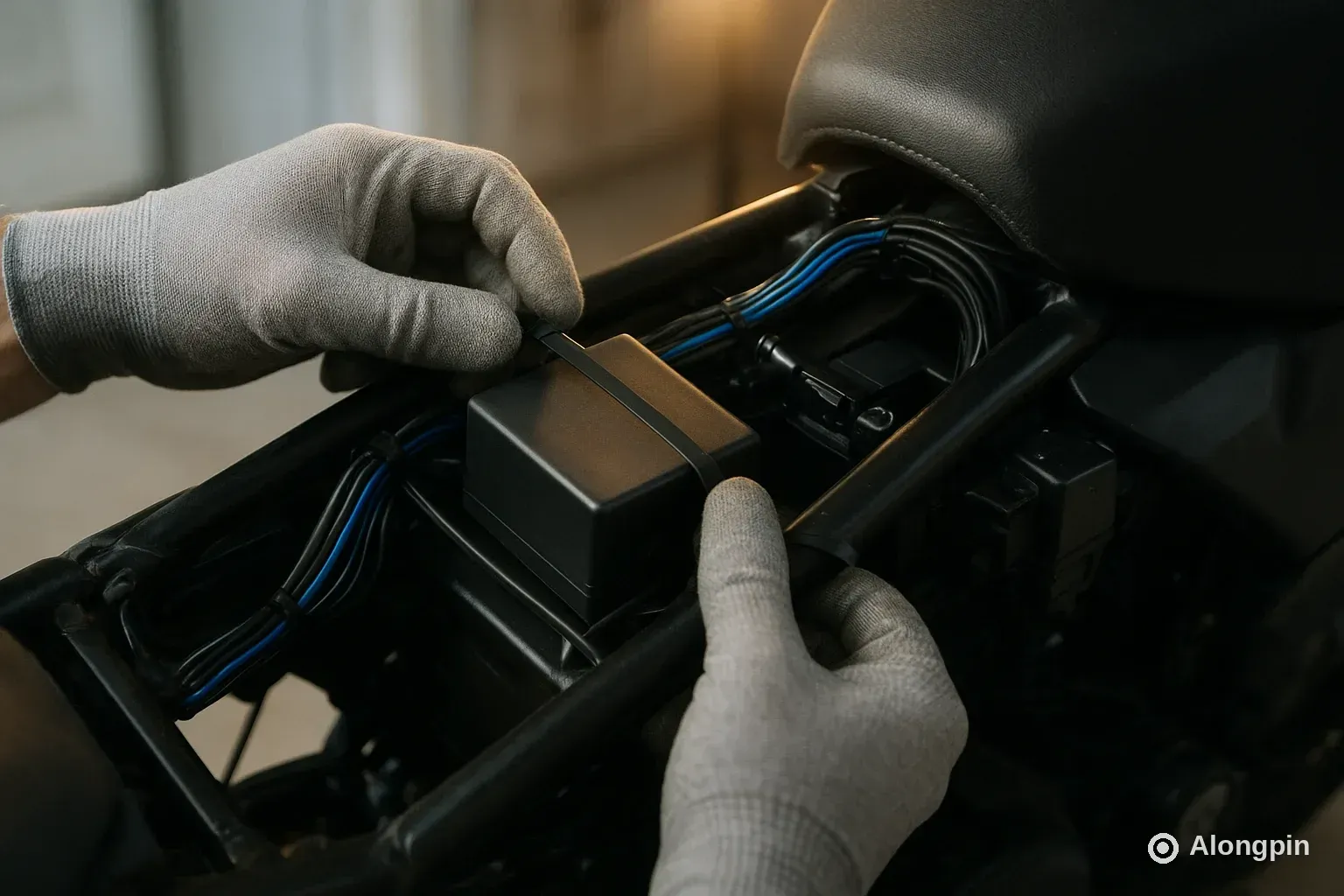
- Under the seat or in the tail section is the usual place: out of sight, near the battery and under plastic, which GPS and mobile signals pass through.
- Not under metal. A steel tank or a metal battery box blocks the signal. The tracker needs a clear view of the sky through plastic or fabric.
- Away from heat. Keep it clear of the exhaust and the engine.
- Protected from water. Choose a tracker sold as waterproof, fix it with cable ties or tape so it cannot rattle, and keep the cable runs away from the chain and anything that moves.
A thief who knows bikes looks under the seat first. Some riders hide the tracker inside a headlight shell or behind a side panel instead; any spot works if it keeps a signal and stays dry.
Which alerts make sense for a bike parked on the street?
Most motorbike thefts happen where the bike is normally parked, often by lifting it into a van. The alerts that help are those that fire the moment the bike moves without you:
- A zone around where it is parked. In Geofences, draw a circle around your parking spot, your street or your building's garage, with a margin of some tens of metres for position drift. Attach it to the bike.
- A leaving alert. In Alerts, choose New alert rule and Geofence exit, limit it with Only these geofences to that zone, and pick the channels that reach you fastest: text message or push, where your server offers them.
- A night-only schedule, if you ride every morning: Only during with a calendar keeps the alert to the hours when the bike should not move.
- The tracker's own alarms, where it reports them: vibration, tow (moving with the ignition off), power cut. Choose them in an Alarm rule under Alarm kinds.
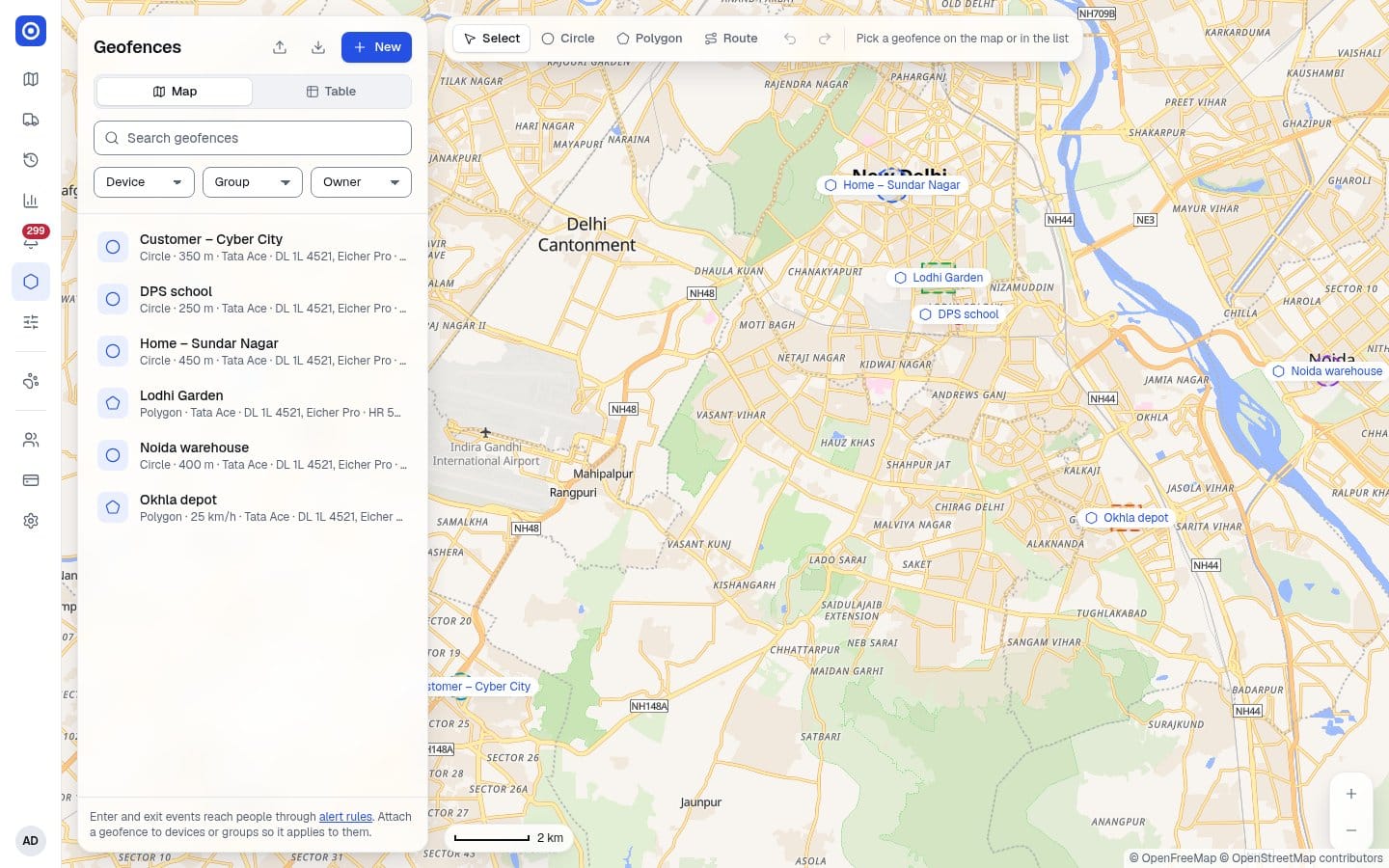
The geofences page explains zones in general. For a second parking place, such as the office, draw a second zone and add it to the same rule. Before you rely on the alert, use Test these channels in the rule: it sends a test message through each channel, so you know a text or a push reaches your phone and not only an inbox you check once a day.
If the bike stands in an underground garage, the tracker may lose its signal there. That is normal: it shows as Offline or Unknown on the map until you ride out, and the zone works from the moment it reports again.
Trips and routes after a ride
A tracker is not only for theft. After a ride, the bike's page in Devices lists each trip under Trips, with its distance, top and average speed and driving time, and Replay plays the route back on the map. You can export a trip as GPX or KML and keep it, or share the route with the friends you rode with. A wired tracker gives a smooth track; a self-powered one that reports rarely draws a rougher line.
Check compatibility first
Many tracker brands sold for motorbikes only work with their own app. To use one with Alongpin, you need a tracker whose server address and port you can set. Type the model, the maker or the protocol from its manual into the device check before you buy. The vehicle trackers page shows what the platform displays for a tracker's reports: position, ignition, battery and the alarms it raises.
When you add the tracker in the portal, Set up the tracker shows the server address and the port of the tracker's protocol, which you enter in the tracker as its manual describes.
How Alongpin helps
Alongpin (alongpin.com) is a GPS tracking platform you open in a browser or on your phone. A tracker in your car, motorbike, scooter or bicycle shows on the live map, with trip history, geofences around home and work, and alerts when it moves or leaves. Check your tracker in the device check, see the vehicle trackers it works with, and start on the pricing page.
Frequently asked questions
Will a GPS tracker stop my motorbike being stolen?
No. It tells you the bike has moved and where it is, so you can call the police. A disc lock, a chain to a fixed point and a garage still do the stopping. The post on car theft and GPS trackers explains what to give the police and why not to go after the bike yourself.
How often does a motorbike tracker report?
A wired tracker typically reports every few seconds to a minute while you ride, depending on its settings. A self-powered tracker reports much less often to save its battery. The post on update interval and battery explains the trade-off.
Can I see harsh braking or lean angle?
The platform shows harsh braking, acceleration and cornering only where the tracker reports them as alarms. Lean angle is not something it displays.