Elder care
Consent and dignity when you locate an older adult
How to track an elderly parent with her agreement: talking it through, recording consent per purpose in a care profile, when a legal representative decides, what withdrawing does, and what the platform does not decide for you.
Ashish Srivastava7 min read
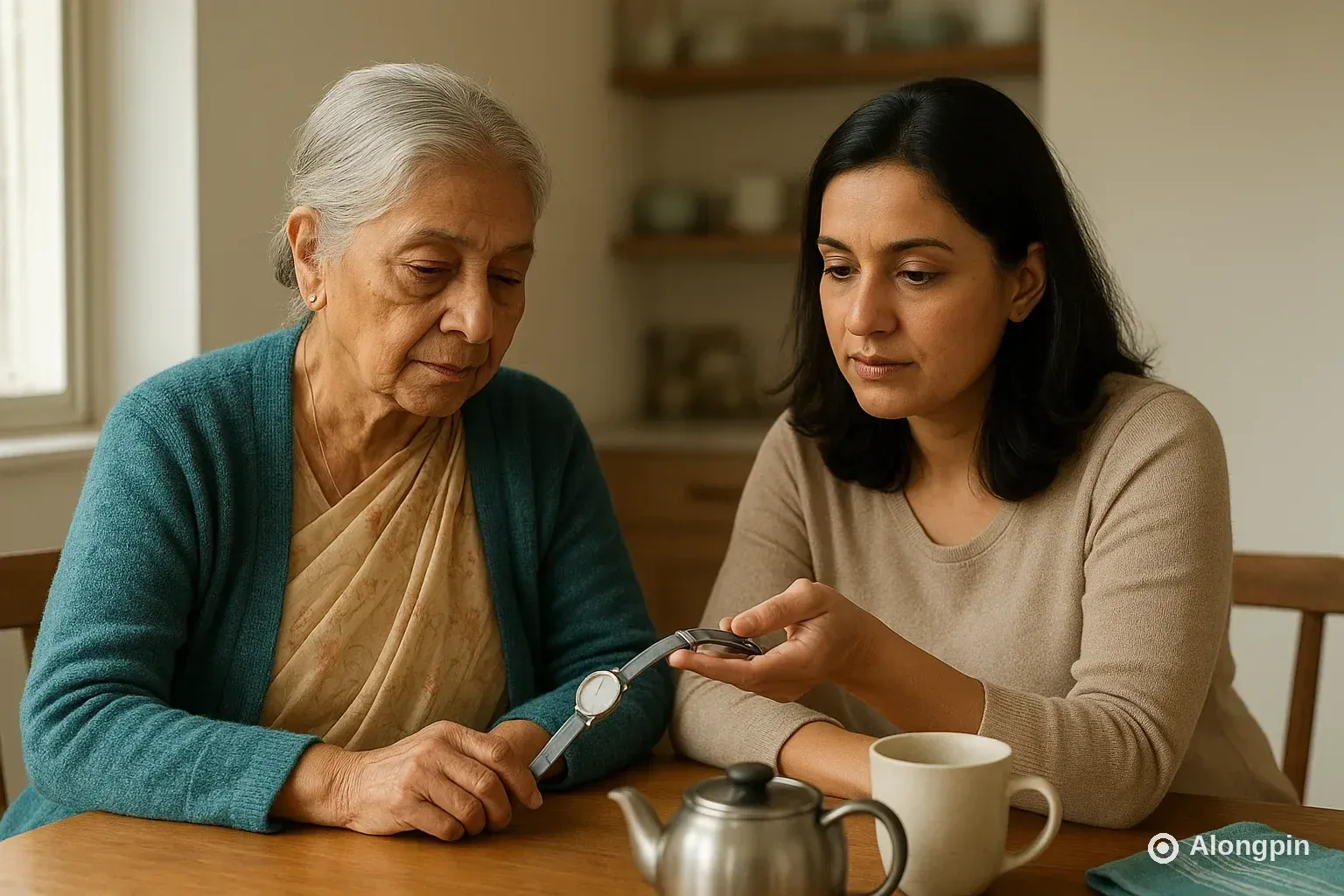
Consent for GPS tracking of an elderly parent means three things: she agrees to it (or, if she cannot decide for herself, someone legally entitled to decide for her does), she knows who sees what, and she can change her mind. A watch on her wrist that reports where she is and raises an SOS is a help she chose, not a watch kept on her. The family that sets it up with her, rather than for her, keeps her trust and usually finds she wears the watch more willingly. This piece explains how to do that well, what Alongpin records in a care profile, and what remains your family's own responsibility.
Key takeaways
- Track with your parent, not of her: talk it through, show her what the family will see, and let her say no to parts of it.
- In a care profile, consent is recorded per purpose: location and safety alerts, health records, sharing with family and carers, and doctor access.
- Where she cannot decide, a legal representative can give consent for her, with the power of attorney stored as proof.
- Each consent can be withdrawn on its own; access stops at once and nothing done before becomes unlawful.
- The platform records what was agreed. It does not judge whether she can decide, and it is not legal advice.
Tracking with a person, not of a person
Most families start from worry: a fall on the stairs, a walk that went on too long, a phone left at home. The worry is real, and a GPS watch answers part of it. But the person wearing it is an adult with her own life, and being located is different from being looked after.
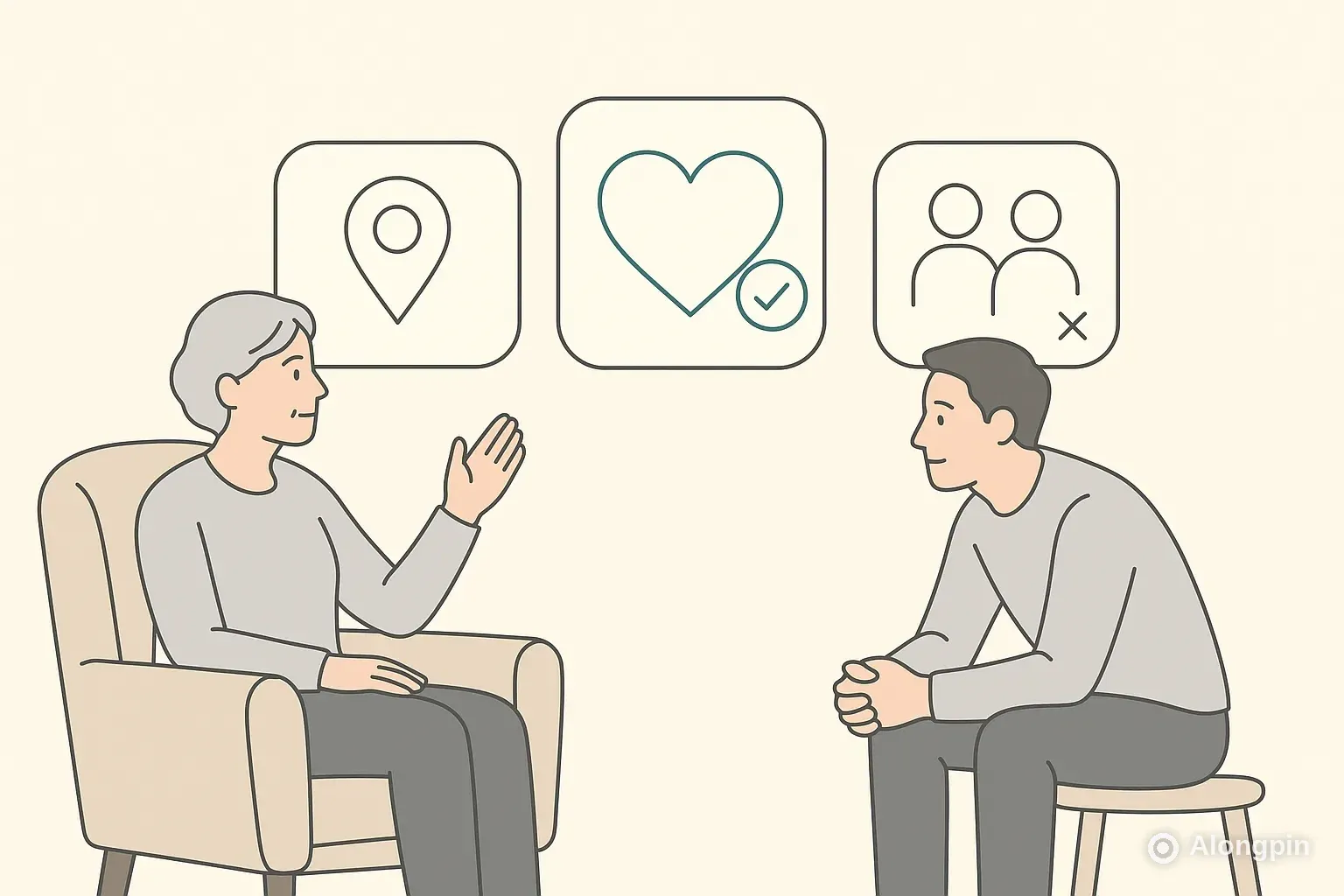
Three questions change the tone of the conversation:
- What is it for? "So that the button reaches us if you fall" is a purpose she can agree to. "So that we always know where you are" is a different request, and she may reasonably refuse it.
- Who will see it? Name the people: her daughter, her son abroad, the neighbour with a key. Not "the family".
- What will they see? Her position, the alerts, perhaps her daily steps. Her medication and her doctor's letters are another matter.
Show her the watch and the profile before you switch anything on. Let her press the SOS button and see the alert arrive on your phone. Older people who understand what a device does, and who decided to wear it, are less likely to leave it in a drawer.
What recorded consent means in a care profile
An elder's care profile in Alongpin keeps her consents next to everything else about her. The profile's owner (usually the relative who set it up) or an administrator records them on the profile's Consents tab, through a short flow with three parts.
1. Who gives consent. Either your parent herself, who reads the text or has it read to her and agrees, or A legal representative (see below).
2. What she agrees to. Each purpose is a separate choice:
| Consent | What it allows |
|---|---|
| Location tracking and safety alerts | Where her watch is; SOS, fall, left home, no movement and low battery alerts |
| Health records | Medication, conditions, measurements and documents |
| Sharing with family and carers | The named users her profile may be shared with |
| Doctor access | A named doctor reads her profile and health data, read only, until a date you set |
She can agree to location and say no to health records. She can agree to sharing with her daughter and not with her nephew. Separate choices mean she does not have to accept everything to get the safety she wants.
3. The text that was shown. The consent names the version of the consent text she saw, and, where your installation has published texts, the language and whether the easy-read version was used. Before saving, the person recording it confirms that they are allowed to give this consent and that she was told what it means.
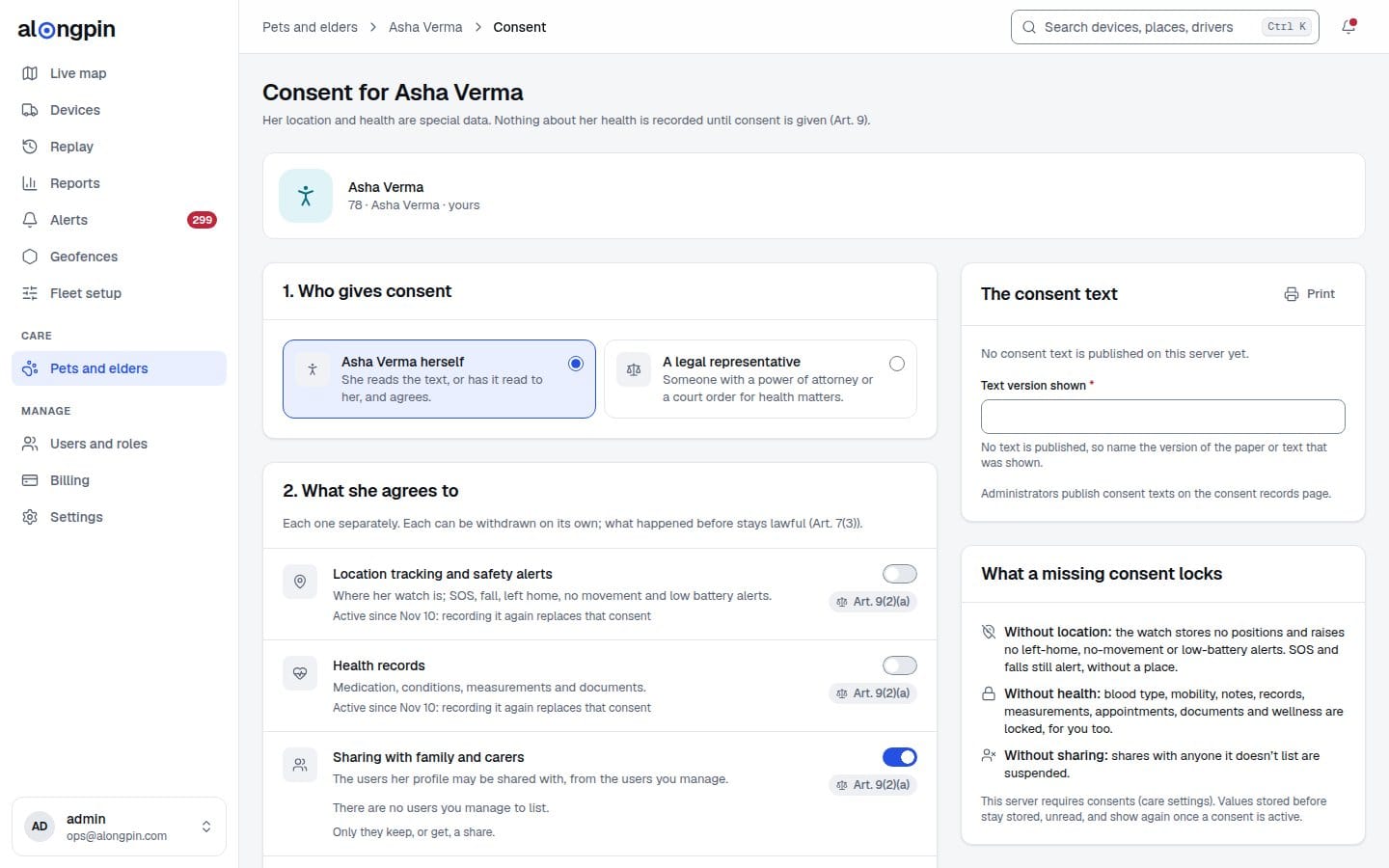
What a missing consent locks
Whether consents are required is a setting of your installation, made by its administrator. Where they are required, the profile behaves accordingly:
- Without location consent, the watch's positions are not stored and leaving-home, no-movement and low-battery alerts are not raised. SOS and fall alerts still come through, without a place.
- Without health consent, blood type, mobility, notes, records, measurements, appointments, documents and wellness stay locked, for the owner and administrators too.
- Without sharing consent, shares with anyone the consent does not list are suspended.
Where consents are not required, recording them still keeps proof of what was agreed and when.
When a legal representative agrees on her behalf
Some parents can no longer weigh up what tracking means: after a stroke, with advanced dementia, or in a crisis. Then the consent can be given by A legal representative, someone with a power of attorney or a court order for health matters.
The flow asks for the representative's name and, optionally, their relationship to her (daughter, son, spouse, sibling, grandchild, court-appointed carer or other). You can attach a scan of the power of attorney; it is saved in the profile as a document of kind Power of attorney and kept as proof of the consent. If you attach it, you also confirm that the document covers health and care decisions. If the representative has an account, linking it lets them see the consent when they sign in and confirm it if a new consent text is published.
Even when a representative decides, your parent is still the person being tracked. Tell her, in words she can follow, what the watch does. The easy-read version of the consent text, where one is published, exists for that conversation.
Withdrawing consent and what happens to access
Consent that cannot be taken back is not consent. On the Consents tab, each consent can be withdrawn on its own, by your parent or by her representative, and the record says who withdrew it.
What happens next depends on the purpose:
- Location: processing stops at once. The watch stores no positions; SOS and falls still alert, without a place.
- Health: health data is locked for everyone, you included. You choose whether to keep it locked (a new consent unlocks it) or delete it now. A power of attorney is kept with its scan as proof.
- Sharing: the shares of the people it covered are suspended until a new sharing consent lists them.
- Doctor access: the doctor's health-data-only share ends at once.
What was done before the withdrawal stays lawful. The consent history keeps every consent, given, replaced and withdrawn, with the text version and date, so you can show later what was agreed at any time.
Knowing who saw what
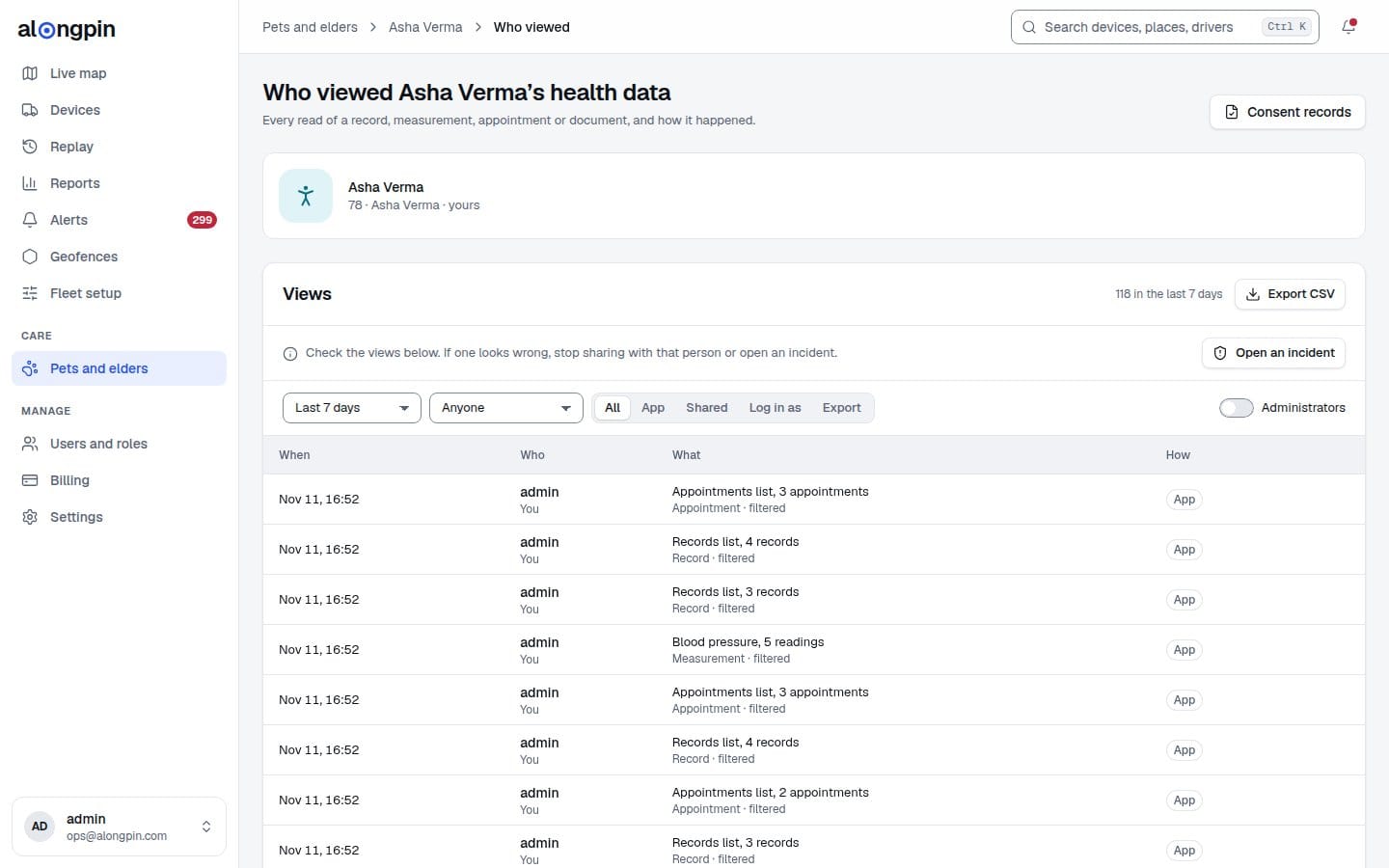
Respect also means being able to answer "who has looked at my things?". For an elder's profile, every read of her health data (a record, a measurement, an appointment, a document or a scan) is logged. The owner and administrators open it as Who viewed on the profile: who read what, when, and how they reached it (their own access, a share, or an administrator logged in as them).
A few more defaults work in her favour. Family members can be given Location only, which leaves out her health data, blood type and notes. Care alert emails and text messages say only that there is an alert, unless the administrator has chosen full details, so her whereabouts do not sit in an inbox. And while an administrator is logged in as a user, her health data stays hidden unless they could read it themselves. More on these choices in consent for an elder's data and who has read it and on the privacy page.
What the platform does not do
Alongpin records consents; it does not decide whether they are valid. Specifically:
- It does not judge capacity. Whether your parent can understand and decide is a question for her, the family and, where needed, her doctor or a court. The platform only records who gave consent and on what basis.
- It does not give legal advice. Rules on monitoring adults, on health data and on powers of attorney differ by country. Your family needs its own lawful ground for collecting her location and health data, and a recorded consent is evidence of it, not a replacement for checking what applies where you live.
- It does not replace a conversation. A ticked box is the end of the decision, not the decision itself.
How to apply this in your family
- Talk first, set up second. Agree on the purpose, the people and the information before you create her profile.
- Record only what she agreed to. If she said yes to location and alerts and no to health records, record just that.
- Share narrowly. Give each person the least they need: Location only for a neighbour with an account, Everything for the main carer, Health data only with an end date for a doctor.
- Revisit it. After a hospital stay, a diagnosis or a move, ask her again. A consent can be recorded anew or withdrawn at any time.
- Keep the paperwork. If a representative decides, store the power of attorney with the profile, where the consent can refer to it.
The care profiles page shows what a profile holds, and the elder care solution how families use it day to day. For the set-up itself, see how to create a care profile for an older relative.
How Alongpin helps
Alongpin (alongpin.com) is a GPS tracking platform you open in a browser or on your phone. A parent's GPS watch or alarm becomes a care profile: SOS, fall, leaving-home and inactivity alerts reach the family and emergency contacts, and health readings, medication refills and appointments sit in one place you can share. See how it works for elder care, and check a watch in the device check.
Frequently asked questions
Is it OK to track an elderly parent?
It can be, when she agrees, knows who sees what and can change her mind, or when a person legally entitled to decide for her does so. Tracking her without her knowledge is a different matter, and in many places it is unlawful.
Can my mother withdraw consent herself?
Yes. Each consent can be withdrawn on its own, and the record shows whether she or her representative withdrew it. The profile's owner or an administrator enters the withdrawal on her behalf.
Does withdrawing consent delete her data?
Not by itself. Health data is locked until a new consent, and the person withdrawing can choose to delete it at once instead. A power of attorney is kept as proof of the consent.